
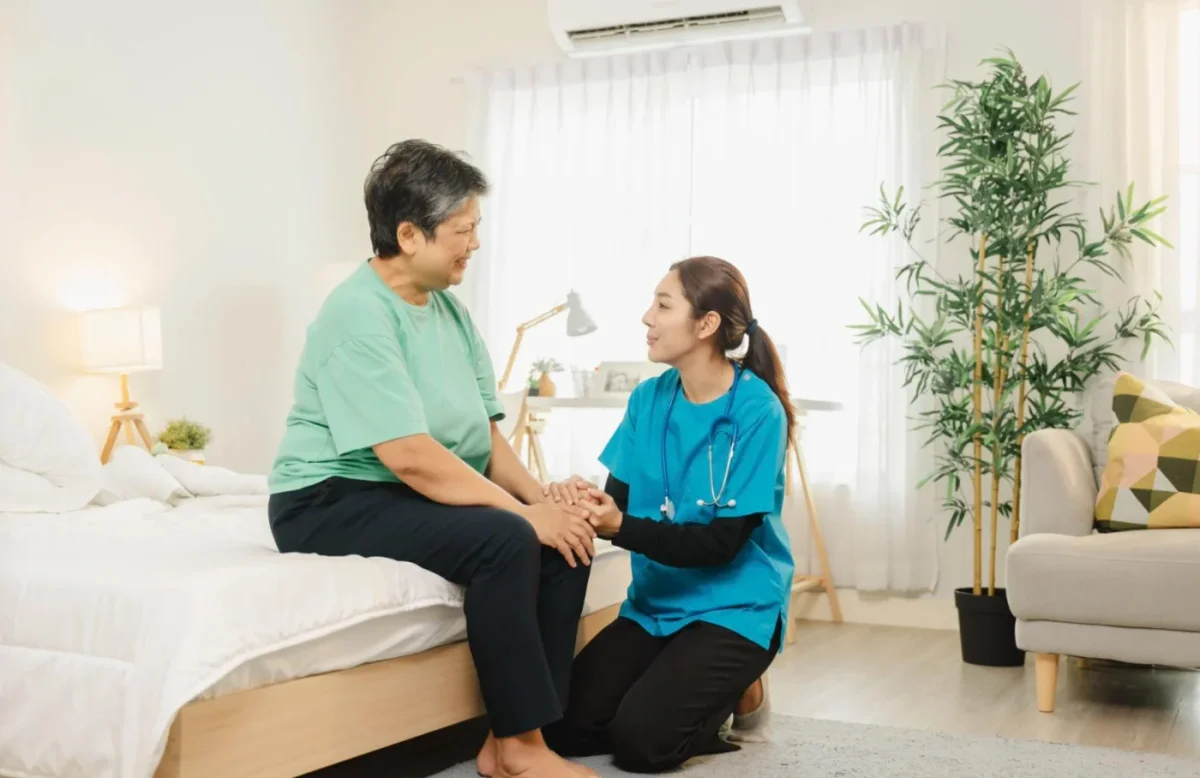
What “Assisted Living” Really Means at Elder Blossom
Not a facility—but a community where care supports life, not replaces it

Looking beyond the label
There are certain expressions that create a picture long before we encounter the reality. "Assisted living" is one of them. For many people, the phrase immediately evokes images of care facilities, schedules, medication rounds and a stage of life defined primarily by limitation rather than possibility. Families exploring options for a parent often carry these assumptions with them, while older adults considering such a move sometimes carry even stronger ones.
Perhaps that is why spending time at Elder Blossom can be such a surprising experience.
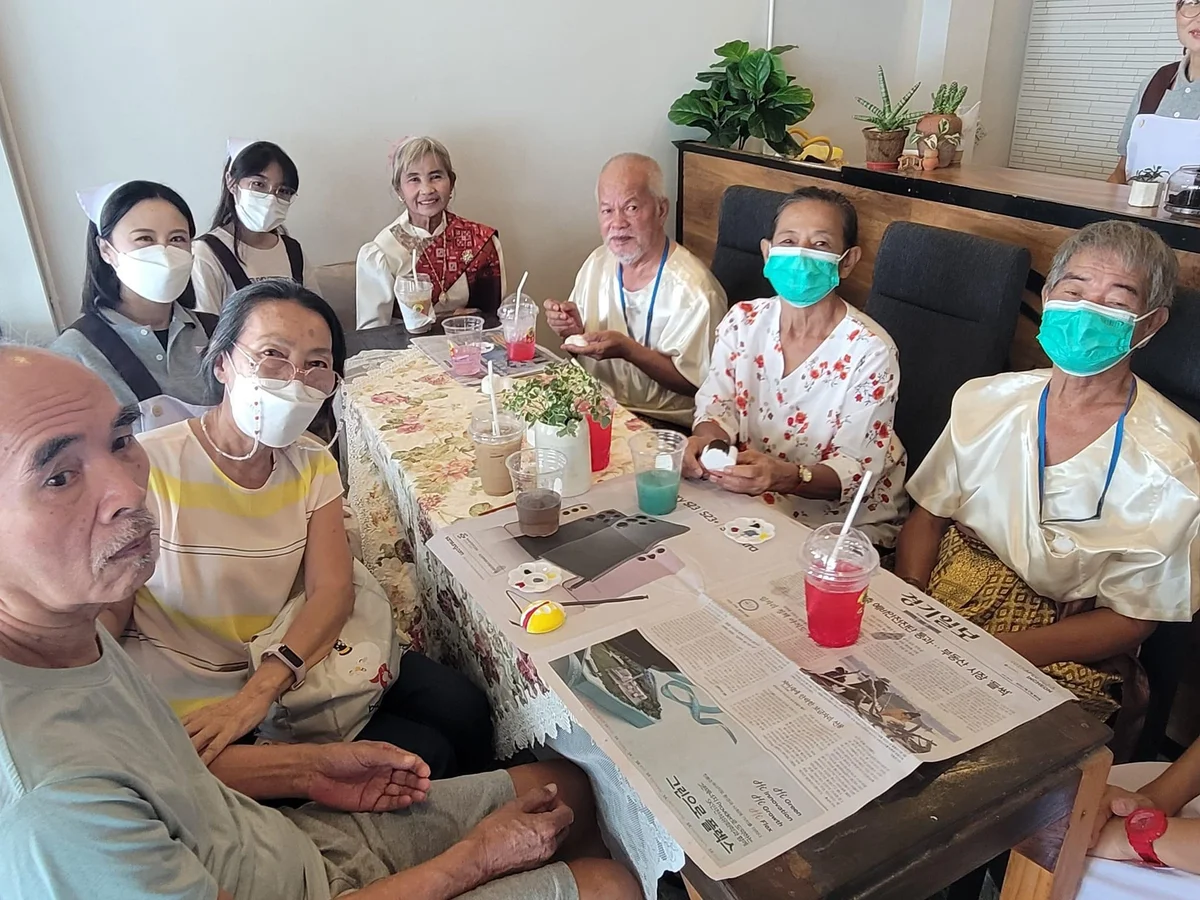
The surprise does not arrive dramatically. It emerges gradually, usually over a few days, through a series of small observations that begin to challenge the picture people carried with them.
One morning, not long after breakfast had begun, a retired Dutch entrepreneur was describing a cycling holiday he had taken decades earlier. Across the table, a former Australian teacher interrupted him to point out that no sensible person would voluntarily cycle through rain for two weeks. A German resident immediately disagreed. A caregiver, sitting among them with a cup of coffee, listened for a while before laughing and admitting that she could not understand why anyone would choose a bicycle over a beach.
The conversation continued for nearly an hour.
At some point, medication was quietly handed to a resident who needed it. Someone else received assistance carrying a breakfast tray. Another resident was reminded about a medical appointment later that morning.
Yet none of those moments changed the atmosphere around the table.
The breakfast remained what it had been from the beginning: a group of people sharing the start of a day.
The longer one spends time at Elder Blossom, the more frequently this distinction appears. Visitors often arrive expecting to evaluate the quality of care, and naturally they do. They notice the caregivers, the facilities, the support systems and the medical arrangements. These things matter enormously. Yet after a few days many find themselves talking about something else entirely.
They talk about the atmosphere.
They talk about the conversations.
They talk about the surprising sense of normality.
This may be because life at Elder Blossom does not revolve around care in the way many people imagine. Care is present everywhere, but it rarely occupies centre stage. Instead, it functions rather like the foundations of a house. Its importance is undeniable, yet most of the living happens elsewhere.
A typical day illustrates this better than any brochure ever could.
After breakfast, some residents may head towards an activity. Others remain on the terrace with newspapers, books or another cup of coffee. A small group might be planning an outing into Hua Hin. Someone else may simply prefer to sit quietly beneath the trees, watching the gardens come alive as the morning progresses.
What is striking is the absence of pressure.
Participation is encouraged but rarely demanded. Conversation is available but solitude is equally respected. Residents move between private and shared spaces much as they would within any established community. Some are naturally sociable and seem happiest when surrounded by others. Some prefer smaller circles. Others enjoy long periods of quiet reflection. These differences are accepted as entirely ordinary because they are.
The caregivers themselves form part of this rhythm.
In many care environments there is an invisible line separating staff from residents. At Elder Blossom, that line often appears much softer. Caregivers join meals, participate in activities, accompany outings and become familiar figures in the daily life of the community. They know who prefers coffee before conversation, who enjoys discussing football, who likes to sit in the shade during the afternoon and who becomes animated whenever grandchildren are mentioned.
Over time, these small pieces of knowledge accumulate into something more meaningful.
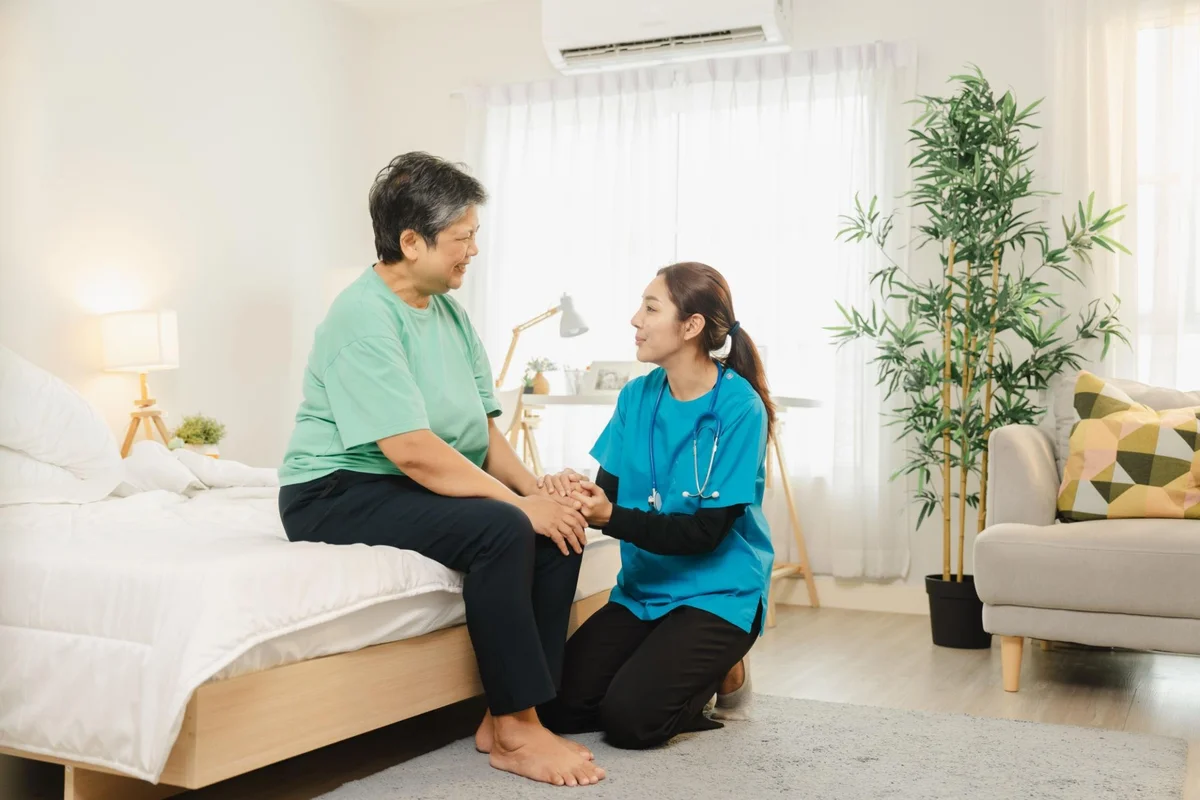
As caregivers and residents spend time together, relationships deepen, trust grows naturally, and a sense of familiarity emerges that makes daily life feel more comfortable and reassuring for everyone involved.
The result is that support begins to feel less like a service and more like a natural part of community life.
This becomes particularly visible during family visits.
For many adult children, the journey towards assisted living has been long and emotionally demanding. Often there have been months or years of increasing concern, interrupted sleep, practical challenges and difficult conversations. The decision itself is rarely simple. Even when families know support is needed, they frequently worry about what will be lost.
Will independence disappear, along with the sense of home that has been built over a lifetime, and will the relationship itself begin to change in ways that are difficult to predict?
These concerns are understandable because they come from love.
Yet conversations with visiting families often reveal an unexpected theme.
Many describe a sense of relief.
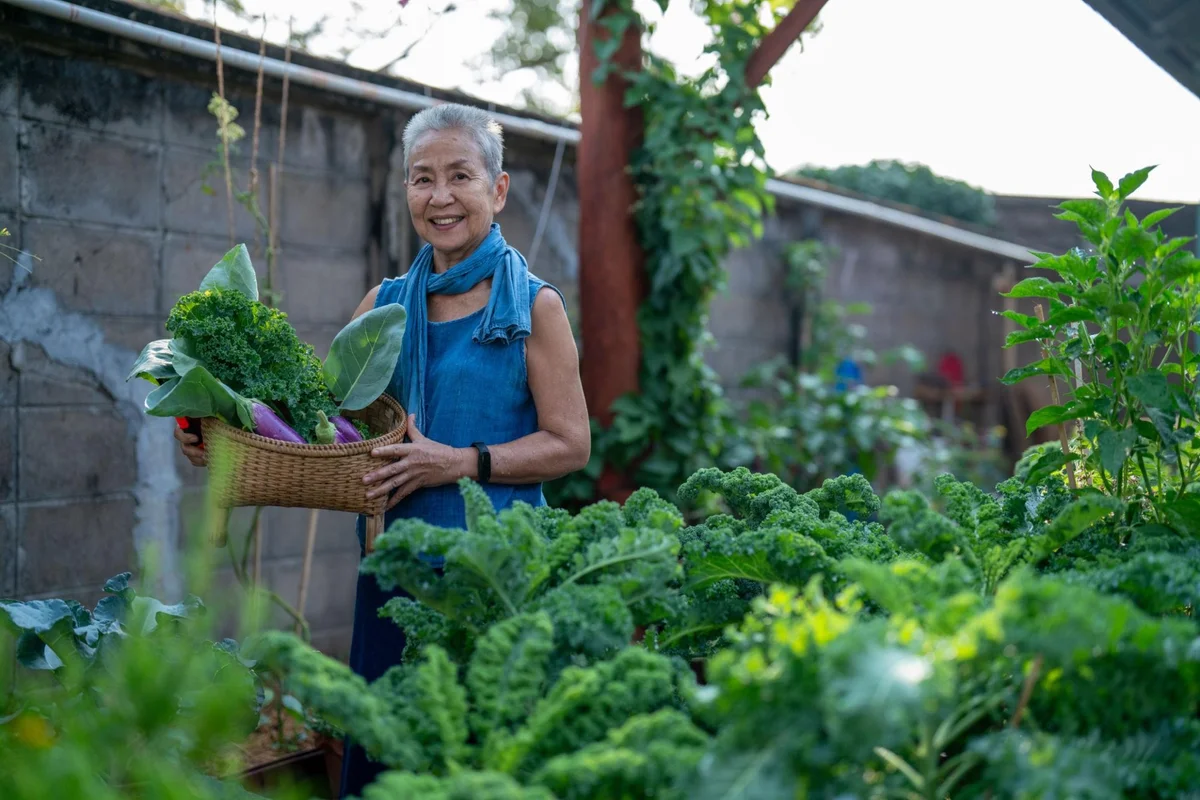
Not because responsibility disappears entirely, but because it becomes shared.
A daughter visiting from Sweden recently described sitting with her mother in the gardens one afternoon. For years, their conversations had revolved around appointments, medications, paperwork and practical concerns. During that visit, they spent nearly two hours talking about old family stories, childhood holidays and people they had not mentioned in decades.
Nothing extraordinary had happened.
They had simply spent time together.
Yet that simple experience felt extraordinary because it had become so rare.
When professional caregivers assume responsibility for much of the daily support, family members often rediscover aspects of their relationship that had gradually been overshadowed by caregiving responsibilities. Visits become less about managing life and more about sharing it.
That observation points towards something deeper.
Much of the public conversation around ageing focuses on care. We discuss support needs, healthcare systems, safety and medical requirements. All of these are important. Yet human beings do not experience their lives primarily as collections of care needs.
They experience life through relationships, routines, conversations, preferences, interests and a sense of belonging.
A person may require assistance with dressing, medication or mobility, but those requirements tell us very little about who that person actually is. The retired architect remains an architect. The former teacher remains a teacher. The parent remains a parent. The traveller remains someone whose eyes still light up when a favourite destination is mentioned.
Good care recognises this.
The purpose of support is not simply to manage needs. The purpose is to create conditions in which the person behind those needs can continue to live as fully as possible.
This idea becomes visible throughout Elder Blossom in ways both large and small. It appears in the shared meals that bring people together. It appears in the friendships that form between residents from different countries and different backgrounds. It appears in the gardens, the activities, the outings and the countless conversations that fill the spaces between them.
Most of all, it appears in the atmosphere.
Visitors often struggle to describe this atmosphere precisely. They usually begin by mentioning the care and then find themselves speaking about community. They begin by discussing facilities and end up talking about people.
Perhaps this is because assisted living, at least as it is understood at Elder Blossom, is not really about assistance alone.
The assistance matters. Without it, many residents would face unnecessary difficulties and limitations. Yet assistance is only one part of a much larger picture.
The larger picture is life itself.
Life continuing in a different form perhaps, supported by caregivers, enriched by companionship and protected by a community that understands both independence and vulnerability.
And after spending time at Elder Blossom, one begins to suspect that this is the distinction that matters most.
The goal is not simply to provide care.
The goal is to create an environment where life remains recognisably, comfortably and meaningfully life.