
Why Hua Hin is Rated the #1 Retirement Destination
Not because it is perfect—but because it offers something many places have lost: balance
Why Hua Hin is Rated the #1 Retirement Destination
Following the path that leads so many people here
Most people who eventually settle in Hua Hin do not arrive with the intention of staying.
The journey usually begins thousands of kilometres away, often during a season when retirement has started to feel less like a distant idea and more like a reality that deserves serious thought. A long winter in Northern Europe, a difficult year caring for ageing parents, a conversation between partners about what the next twenty years might look like — the starting point varies, but the question is often the same.
If we could choose where to spend the next chapter of our lives, where would that be?
The search that follows has become familiar. Countries are compared. Costs are calculated. Healthcare systems are researched. Friends who have already moved abroad are questioned in detail. The internet offers endless opinions and rankings, all claiming to reveal the ideal destination.
Somewhere during that process, many people encounter Hua Hin.
At first, it can seem an unlikely candidate. Thailand itself is already competing with numerous alternatives, and within Thailand there are destinations that appear more famous and more dramatic. Bangkok dominates the imagination as the country's great metropolis. Phuket is known around the world. Chiang Mai has become a favourite among digital nomads and long-stay visitors.
Hua Hin enters the conversation more quietly.
Yet those who begin looking more closely notice something curious. The people who live there tend to speak less about attractions and more about life. They do not describe a destination. They describe a routine. The distinction is subtle but important.
Eventually curiosity wins and a visit is arranged.
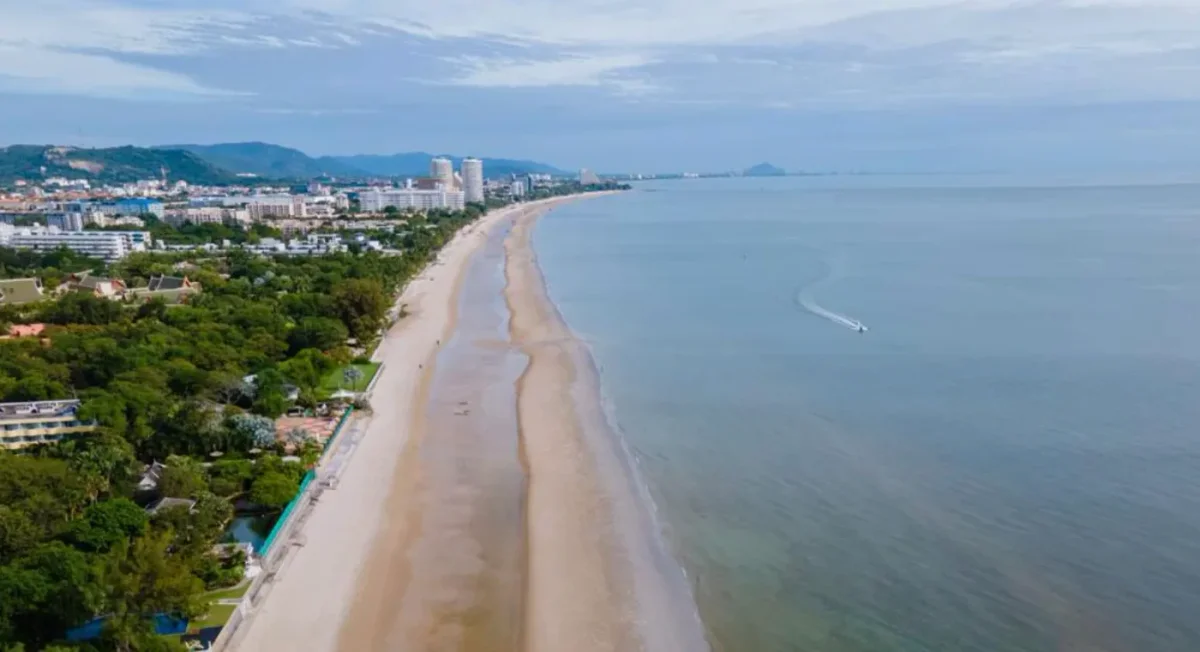
The first days in Hua Hin rarely produce dramatic revelations. In fact, many visitors find themselves wondering whether they have missed something. The town feels relaxed. Traffic moves. Markets operate. People go about their daily business. The beach stretches for kilometres, yet somehow manages to remain part of everyday life rather than a stage set for tourism.
Only gradually does the significance of this become clear.
Retirement, after all, is not a holiday.
The challenge is not finding somewhere exciting enough for two weeks. The challenge is finding somewhere that remains satisfying after the excitement has faded and ordinary life has returned.
Walking through Hua Hin in the morning provides an early clue.
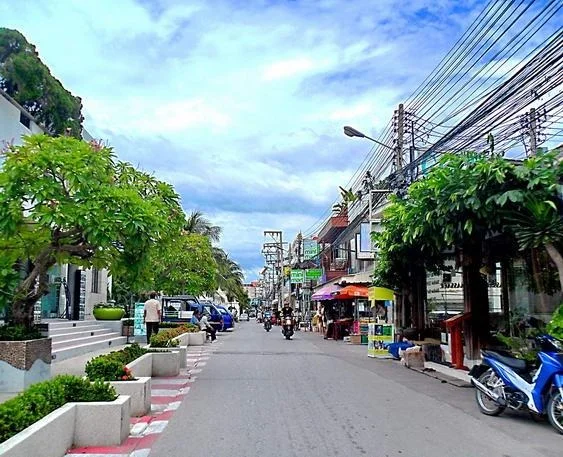
The beach is already active long before the day becomes hot. Some people walk. Others sit quietly facing the sea. Small groups gather around coffee shops that have become part of their daily routine. Along Soi 61, in the streets around the Hilton area, near Market Village and throughout the town, cafés begin filling with a mixture of Thai residents, long-term expatriates and seasonal visitors who are slowly becoming something more permanent.
Conversations drift between tables. Plans for the day are exchanged. Familiar faces appear.
For many people considering retirement, these ordinary scenes prove surprisingly reassuring.
A little later, the practical exploration begins.
The prospective retiree who arrived wondering about healthcare often follows a route that countless others have followed before. A drive along Phetkasem Road reveals a side of Hua Hin that is not always visible in holiday photographs. Modern facilities appear one after another. Bangkok Hospital Hua Hin, with its international patient services and specialist departments, stands as one of the region's major private hospitals. Closer to the centre, San Paulo Hospital has long served both Thai and international residents, while Hua Hin Hospital provides a substantial public healthcare presence. Between them sit numerous specialist clinics, dental practices, physiotherapy centres and facilities such as Be Well Medical Center, developed specifically with the area's international community in mind.
What often surprises visitors is not simply the quality of these facilities but their accessibility. Within a relatively compact town, healthcare does not feel distant or complicated. It feels integrated into daily life.
That same sense of practicality emerges elsewhere.
A visitor who initially imagined Hua Hin as a sleepy seaside town soon discovers that much of daily life revolves around places such as Market Village and Bluport. These are not merely shopping malls. They function as modern town centres where people buy groceries, meet friends for lunch, visit banks, attend medical appointments, browse bookshops, watch films or simply spend an hour in air-conditioned comfort during the hottest part of the afternoon.
The observation may sound mundane, but it touches on something important.
The longer people stay in Hua Hin, the less they evaluate it as tourists and the more they evaluate it as residents.
Can I buy what I need?
Can I reach a doctor easily?
Can I meet friends without driving for an hour?
Can I imagine this becoming my normal life?
Gradually the answers become apparent.
The beach remains part of that answer. Unlike many coastal destinations, Hua Hin's shoreline has never been separated from the town itself. Early morning walkers, horse riders, fishermen, families and visitors share the same stretch of sand. Five-star hotels such as the Centara Grand, Hyatt Regency and Marriott sit comfortably alongside local cafés, seafood restaurants and residential neighbourhoods. The result is a coastline that feels connected to the life of the town rather than reserved exclusively for visitors.
This balance appears repeatedly throughout Hua Hin.
There is sophistication without pretension.
There is convenience without congestion.
There is development without losing sight of what attracted people in the first place.
For retirees, these qualities often matter more than they expected.
Financial considerations, for example, remain important, but the conversation gradually changes. People arrive asking whether Thailand is affordable. They leave talking about value. A pension that might feel restrictive elsewhere often allows a comfortable lifestyle here. Good food, healthcare, domestic help when needed, social activities and occasional travel remain within reach for many people. The result is not luxury in the conventional sense, but freedom from constant financial pressure.
That freedom creates options.
And options create peace of mind.
Yet perhaps the most powerful factor remains the most difficult to quantify.
Over time, Hua Hin develops a sense of familiarity.
The coffee shop owner begins recognising regular customers. The same faces appear during morning walks. Restaurant staff remember names and favourite tables. Friendships emerge almost accidentally through repeated encounters. The town is large enough to offer variety and small enough to make those encounters possible.
What begins as a visit slowly becomes a routine.
What begins as a routine slowly becomes a life.
And somewhere along that path, many people realise they have stopped comparing Hua Hin with other destinations.
The search is over.
Not because they found perfection. No place offers that.
Rather because they found something that becomes increasingly valuable with age: a place where life feels sustainable.
The practical elements are all present — healthcare, infrastructure, shopping, services, safety and accessibility. Yet these alone do not explain Hua Hin's reputation. Many places possess similar advantages.
What makes Hua Hin different is the way those advantages are woven into an environment that remains human in scale and gentle in rhythm.
For those who arrive searching for a retirement destination, this is often the discovery that matters most.
They come looking for a place to live.
They find a place where life unfolds naturally.
And that, more than any ranking, may explain why so many decide to stay.